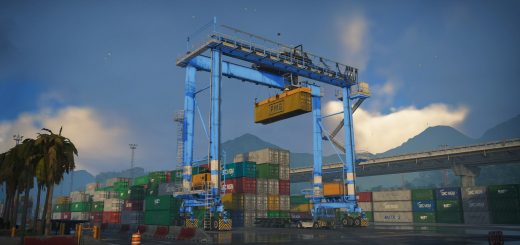
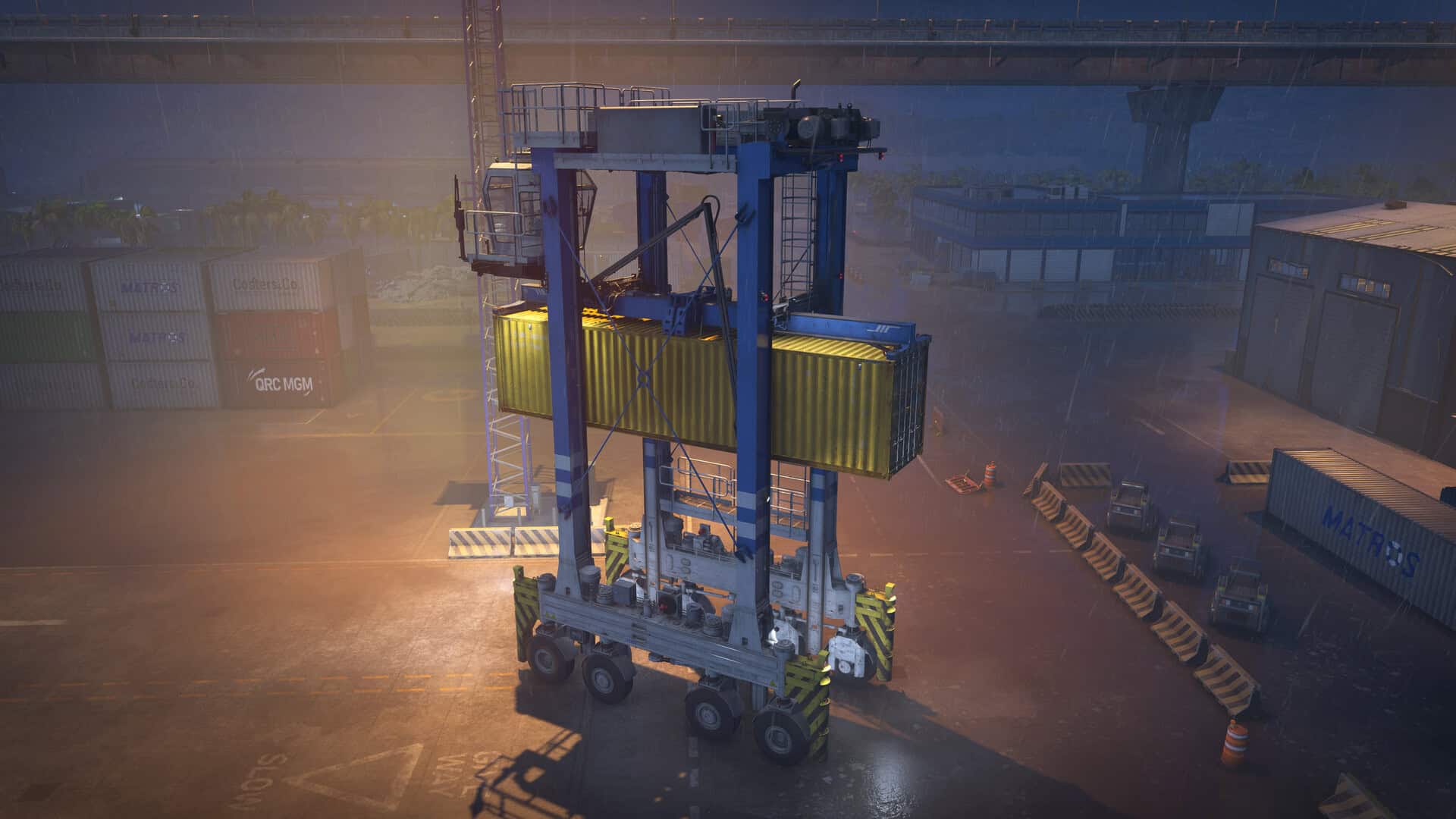
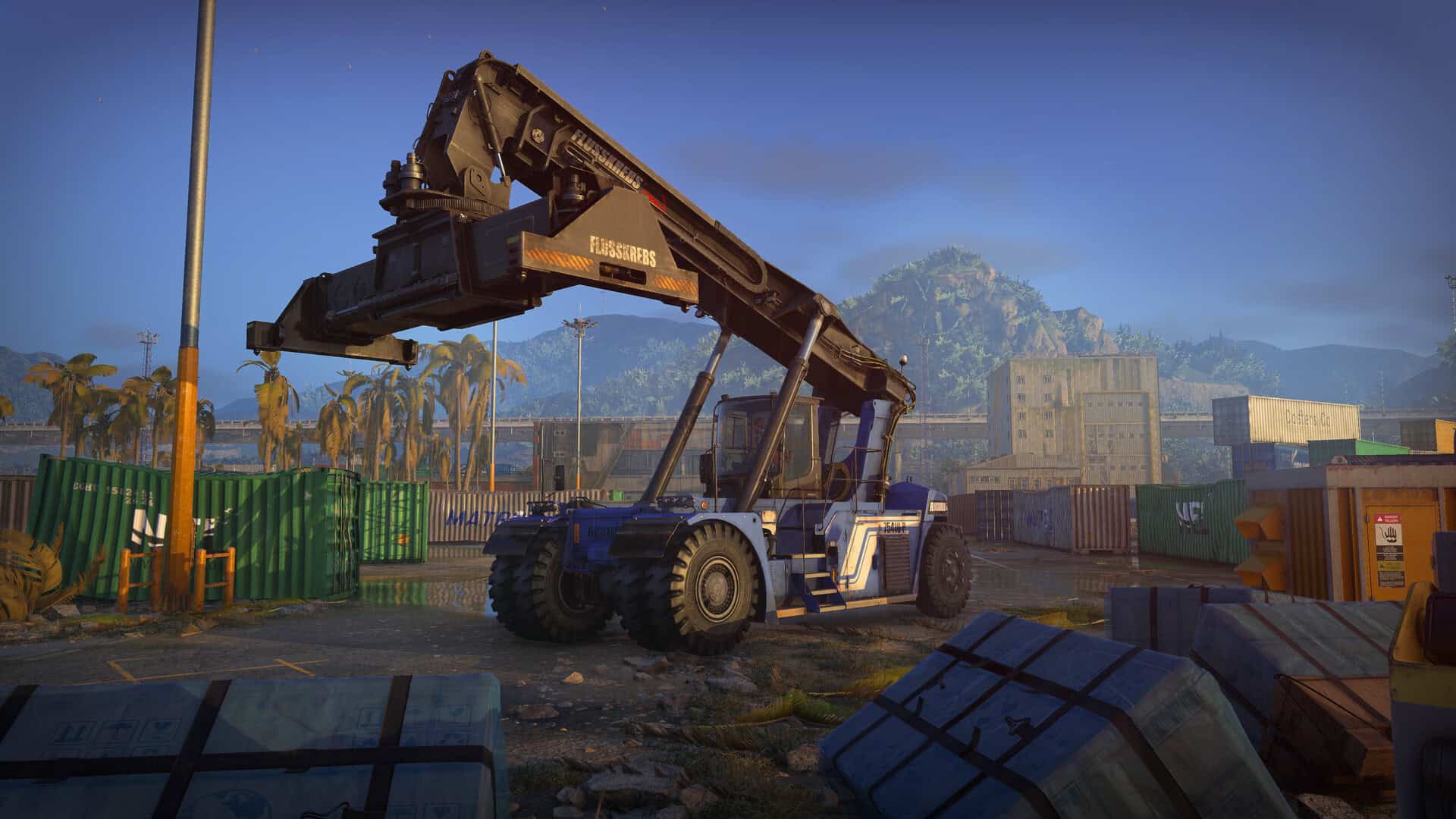
Transporting cargo is one of the most common tasks in Docked. Containers and materials constantly move between ships, storage areas, and vehicles across the port. Handling cargo properly keeps operations organized and helps avoid delays while completing contracts.
Prepare Cargo Before Moving It
Before transporting any container, make sure the cargo is properly aligned with your lifting equipment. Misaligned containers can shift while moving, which makes vehicles harder to control and increases the chance of dropping the load. Taking a moment to position the machine correctly usually prevents problems later.
It is also important to check the surrounding area before lifting cargo. Ports often have stacked containers, machines, and narrow workspaces. Ensuring there is enough space around the load will make lifting and moving the cargo much easier.
Move Cargo Carefully Across the Port
Once the load is secured, careful driving becomes the most important factor. Heavy cargo affects how machines handle, so moving too quickly can make the load unstable. Smooth acceleration, gentle turns, and controlled braking help keep containers balanced during transport.
Keeping the load lower while driving also improves stability. Raising containers too high during movement can make machines harder to control and increases the risk of hitting nearby objects.
Place Cargo With Precision
Delivering the cargo safely is the final step of the process. When placing containers into storage areas or delivery zones, take time to align the machine properly. Accurate positioning keeps cargo areas organized and prevents the need for repeated adjustments.
Well organized containers also make future tasks easier, especially when other machines need to access the same cargo later. Maintaining clean and structured storage areas helps the entire port run more efficiently.